
A beautiful cabinet finish starts long before the first coat is applied. Professional cabinet painters in Colorado Spring prepare cabinets for a durable finish through careful cleaning, sanding, repairs, priming, and precise application. In this article, we’ll explain each preparation step, why it matters, and how proper techniques help create a smooth, durable cabinet coating that can handle everyday use.
If your kitchen cabinets look dated, worn, stained, or scratched, professional cabinet painting can provide a major visual upgrade without replacing the entire kitchen. But a durable finish depends on much more than choosing the right paint color. Professional cabinet painters know that careful preparation is the foundation of a smooth, attractive, long-lasting result.
For homeowners considering cabinet painting in Colorado Springs, the preparation process typically involves inspection, hardware removal, cleaning and degreasing, surface preparation, repairs, priming, controlled application, and proper curing. Each stage helps the new coating adhere properly and withstand the daily demands of a busy kitchen.
Why Does Cabinet Preparation Matter?
The simple answer is that paint adheres best to a clean, properly prepared surface. Grease, cooking residue, dirt, loose coatings, damaged areas, and glossy surfaces can interfere with adhesion and affect the final appearance.
Professional cabinet painting is therefore not simply a matter of applying a new color over an existing finish. The condition and material of the cabinet must be evaluated first, followed by the preparation steps appropriate for that surface.
Skipping preparation can contribute to problems such as uneven coverage, visible imperfections, poor adhesion, premature wear, or an inconsistent finish.
1. Professional Cabinet Painters Inspect the Cabinets
Before preparation begins, the cabinets should be evaluated carefully.
A professional looks for:
- Peeling or damaged existing coatings
- Cracks, dents, and surface imperfections
- Grease and cooking residue
- Water or moisture-related damage
- Loose components
- Wood, MDF, laminate, or other cabinet materials
- Areas requiring additional repair or preparation
This assessment helps determine the appropriate professional cabinet painters’ preparation process rather than applying the same treatment to every cabinet.
It also helps identify situations where painting may not be the best solution. Severely damaged or deteriorated cabinets may require repair or replacement before a new coating can provide a satisfactory result.
2. Hardware, Doors, and Drawers Are Removed
Cabinet doors, drawers, knobs, pulls, hinges, and other removable hardware should be taken off when appropriate.
Removing these components gives the painter better access to edges, corners, profiles, and other areas that are difficult to coat accurately while everything remains installed.
It also helps protect hardware from unwanted overspray or paint buildup. Doors and drawer fronts can be prepared and coated separately, helping create a more consistent appearance throughout the kitchen.
3. Cabinets Are Thoroughly Cleaned and Degreased
One of the most important preparation stages is cleaning.
Kitchen cabinets naturally collect oils, grease, food residue, dust, and household grime. Simply wiping a cabinet with a damp cloth may not remove everything that could interfere with a new coating.
Professional cabinet painters therefore begin with thorough cleaning and appropriate degreasing. The objective is to create a clean surface before additional preparation takes place.
This step is particularly important around cabinet doors, drawer fronts, handles, and areas located close to cooking surfaces.
4. Surfaces Are Prepared for Better Paint Adhesion
After cleaning, the existing surface may need additional preparation.
Depending on the cabinet material and existing finish, this can include appropriate sanding, scuffing, or other methods designed to create a suitable surface for the new coating.
The goal is not simply to remove the entire existing finish. Instead, the preparation should address adhesion, imperfections, and surface condition while avoiding unnecessary damage to the cabinet material.
This is one reason professional cabinet painters can differ significantly from a quick DIY repaint. Professionals need to understand how the existing substrate and coating will interact with the new finish.
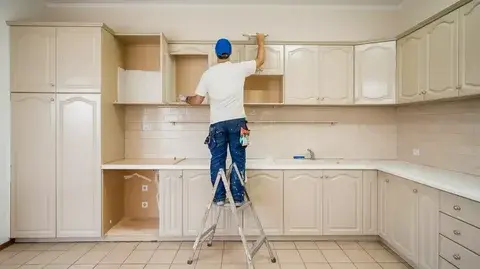
5. Imperfections Are Repaired Before Painting
A fresh coating can improve the appearance of cabinets, but it will not automatically hide every dent, crack, hole, or damaged area.
Before coating, appropriate repairs may be made to damaged surfaces. Depending on the cabinet condition, this can involve filling imperfections, addressing loose components, smoothing problem areas, or repairing damaged edges.
Taking care of these details before painting helps create a more uniform final appearance.
6. Primer Is Selected for the Surface
Primer can play an important role in a durable cabinet finish, particularly when the existing surface presents adhesion challenges or when the substrate requires additional preparation.
The appropriate primer depends on factors such as the cabinet material, existing coating, color transition, and desired finish.
Rather than treating primer as an optional shortcut, professional painters evaluate whether and where it is needed to support the coating system.
7. The Finish Is Applied With Controlled Techniques
Once the cabinets are properly prepared, the finish can be applied.
Professional cabinet painters may use controlled spray application or other appropriate techniques to achieve consistent coverage. The method depends on the project, cabinet design, coating system, and desired appearance.
Careful application is especially important around cabinet profiles, edges, corners, doors, and drawer fronts.
The objective is a uniform finish with appropriate coverage—not simply getting paint onto the surface as quickly as possible.
8. Proper Curing Helps Protect the New Finish
Painting and curing are two different stages. Professional cabinet painters understand that a cabinet coating may feel dry to the touch before it has fully cured and reached its intended hardness, durability, and resistance to everyday kitchen wear.
That is why homeowners should follow the coating manufacturer’s recommended drying and curing instructions before returning cabinets to normal heavy use.
Avoiding unnecessary handling during the curing period can help protect the newly finished surfaces from premature marks, sticking, or damage.
DIY Cabinet Painting vs. Professional Preparation
DIY cabinet painting can appear straightforward, but preparation often requires more time and attention than homeowners initially expect.
| DIY Approach | Professional Approach |
| May focus primarily on color | Starts with cabinet condition and surface assessment |
| Basic cleaning may be used | Thorough cleaning and degreasing |
| Preparation can be inconsistent | Surface preparation is planned for the substrate |
| Repairs may be overlooked | Imperfections are addressed before coating |
| Application may vary from piece to piece | Controlled application aims for consistent results |
| Curing may be underestimated | Manufacturer guidance is considered |
For homeowners who want predictable results, professional preparation can be one of the most important parts of the project.
A Note About Older Colorado Springs Homes
If your home was built before 1978, ask about lead-based paint before sanding, scraping, or otherwise disturbing existing painted surfaces. The EPA’s Renovation, Repair and Painting (RRP) Rule applies to paid renovation, repair, and painting work that disturbs paint in pre-1978 housing and child-occupied facilities.
Colorado Springs’ own homeowner rehabilitation information also notes that lead-based paint testing may be performed on homes built before 1978.
This makes proper planning especially important for older properties. Homeowners should ask contractors about applicable lead-safe requirements before work begins.
Cabinet Painters Prepare Cabinets for a Durable Finish
The most important lesson is simple: a durable cabinet finish starts before the first coat is applied.
For Colorado Springs homeowners, the right process means evaluating the cabinets, removing hardware where appropriate, cleaning and degreasing thoroughly, preparing the surface, repairing imperfections, selecting suitable primers and coatings, applying the finish carefully, and allowing adequate curing time.
If your existing cabinets are structurally suitable but need a refreshed appearance, professional cabinet painting can be an alternative worth considering before committing to full cabinet replacement. To explore professional cabinet coating options for your kitchen, visit Colorado Cabinet Coatings.
We proudly serve homeowners throughout Colorado Springs, CO, and the surrounding areas, providing professional cabinet painting and coating services designed to refresh and protect your kitchen cabinets.
Frequently Asked Questions
How do professional cabinet painters prepare cabinets before painting?
They typically inspect the cabinets, remove hardware where appropriate, clean and degrease surfaces, address imperfections, prepare the existing finish, select suitable primers and coatings, and protect surrounding areas before application.
Do cabinets need to be sanded before professional painting?
Often, some form of surface preparation is necessary, but the exact method depends on the cabinet material, existing finish, and coating system. Professional painters determine the appropriate preparation rather than assuming every cabinet needs identical treatment.
How long does a professional cabinet coating last?
Durability depends on the coating system, surface preparation, application quality, cabinet use, and maintenance. Proper preparation and following the coating manufacturer’s curing instructions are important parts of achieving a durable result.
Can professional cabinet painters paint over old kitchen cabinets?
In many cases, existing cabinets can be professionally refinished if their underlying condition is suitable. However, damaged, deteriorated, or moisture-compromised cabinets may require repair or replacement.
Is professional cabinet painting better than DIY?
Professional painting can provide advantages in preparation, equipment, application consistency, and finish quality. DIY may be appropriate for homeowners comfortable with the time and detailed preparation required, but cabinet painting is more involved than simply applying paint.
Can cabinets be painted without removing the doors?
Some projects can be completed with doors installed, but removing doors and hardware where appropriate can provide better access and help produce more consistent results.
What should Colorado Springs homeowners ask cabinet painters?
Ask about preparation methods, coating products, application techniques, curing requirements, project scope, cleanup, warranties if offered, and applicable lead-safe requirements for older homes.